 blog
Can You Mix Lithium and AGM Batteries? A Safety Guide
Table of Contents
- The Short Answer: Why Mixing Lithium and AGM Batteries Is Risky
- How Lithium and AGM Battery Chemistry Differs
- Lithium vs AGM Battery Charging Voltage: The Critical Mismatch
- Mixing Lithium and AGM Batteries in Parallel: Current Sharing Problems
- Lithium and AGM Batteries in Series: Why It Doesn't Work
- Charging Lithium and AGM Batteries Separately: The Safe Approach
- Safe Wiring, Isolation, and Protection Requirements
- Equipment Compatibility Checklist and Troubleshooting
- Frequently Asked Questions
Last Updated: October 21, 2026
The Short Answer: Why Mixing Lithium and AGM Batteries Is Risky
Can you mix lithium and AGM batteries? The short answer is no, not directly. When you mix lithium and AGM batteries by connecting them in parallel or series, it creates serious electrical incompatibilities that damage both batteries and risk system failure. The two battery chemistries operate on fundamentally different voltage profiles, charge curves, and internal resistance characteristics. When forced together, they fight each other, pull unequal current, and can overheat or fail prematurely.
The real question isn't whether you can mix them, it's whether you should. Keep them separate with proper isolation, dedicated chargers, and battery management systems.
How Lithium and AGM Battery Chemistry Differs
Lithium and AGM batteries are built on different chemical foundations, which is why they don't play well together.
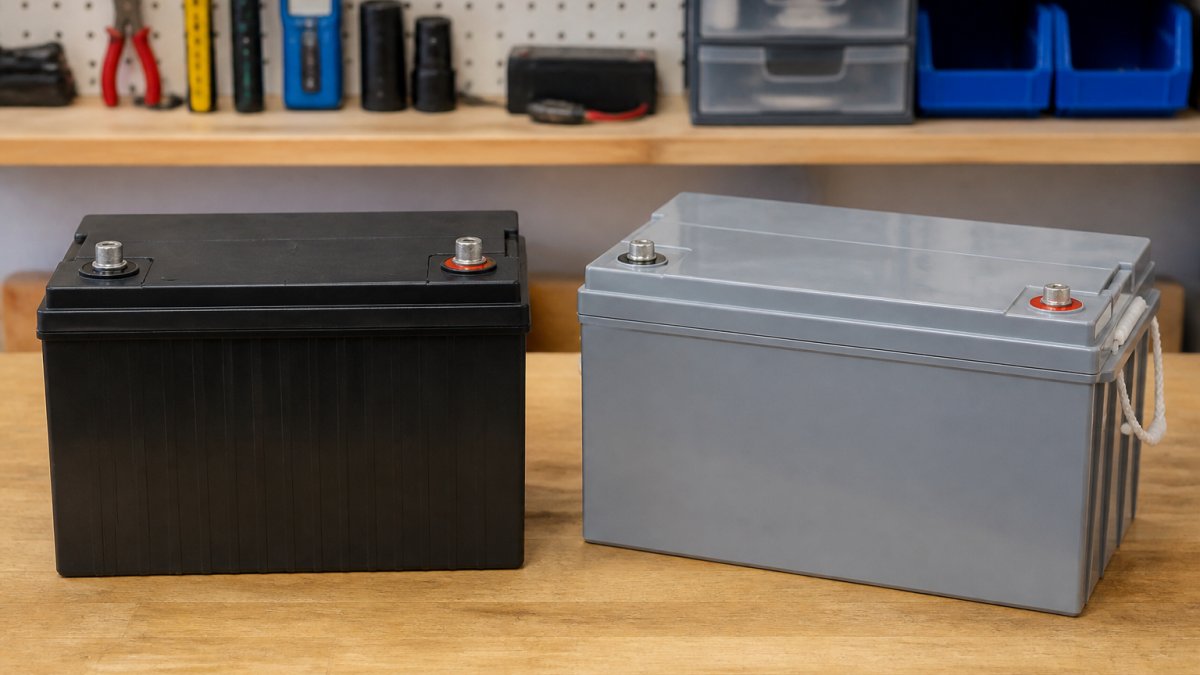
Lithium batteries use lithium iron phosphate (LiFePO4) chemistry in most modern systems. They charge fast, discharge deeply, and maintain high voltage throughout their discharge cycle. AGM batteries are lead-acid technology, they charge more slowly and voltage drops steadily as they discharge.
The real conflict starts with voltage behavior. Lithium batteries hold a nearly flat curve, staying around 13.2V for most of their usable capacity, then dropping sharply near empty. AGM batteries slope from 12.8V downward. A charger designed for one type will undercharge or overcharge the other.
Nominal Voltage vs. Resting Voltage
Nominal voltage is the battery's labeled voltage, 12V for both lithium and AGM systems. But that's where the similarity ends. Resting voltage is what the battery actually sits at when not being charged or discharged.
A fully charged lithium battery rests around 13.2V; an AGM rests around 12.8V. That 0.4V difference sounds small but isn't. In parallel, it forces current from the lithium battery into the AGM battery even when neither is charging or discharging.
This continuous current bleed damages both batteries: the lithium discharges without purpose, the AGM receives charging current it wasn't designed for, and both wear faster.
State of Charge and Internal Resistance
State of charge (SOC) is how full each battery is. At 50% SOC, lithium sits around 12.8V and AGM around 12.4V, so they're never truly balanced even if they started together.
Internal resistance is the battery's internal opposition to current flow. Lithium batteries have very low internal resistance, typically 0.01 to 0.05 ohms. AGM batteries have higher internal resistance, typically 0.05 to 0.15 ohms. When connected in parallel, the lithium battery's lower resistance means it will supply most of the current during discharge. The AGM battery sits idle. Over time, the AGM battery sulfates and degrades while the lithium battery cycles hard.
Lithium vs AGM Battery Charging Voltage: The Critical Mismatch
This is where the incompatibility becomes dangerous.
Lithium batteries need 14.2V to 14.6V during absorption charging to fully charge the cells. An AGM charger stops at 13.6V or lower, so the battery never fully charges.
AGM batteries should not exceed 14.4V during charging; higher voltage causes gassing and accelerates plate corrosion. A lithium charger overcharges AGM, causing heat, water loss, and early failure.
A single charger must choose one voltage and cannot satisfy both: one battery undercharges, the other overcharges, and both degrade faster.
Mixing Lithium and AGM Batteries in Parallel: Current Sharing Problems
Parallel connections are where most people try to mix battery types, and where most failures happen. Both batteries connect to the same positive and negative bus and should share load equally. They don't.
Current flows to the path of least resistance. The lithium battery's lower internal resistance makes it the preferred path, so during discharge it supplies 70-80% of the current while the AGM supplies 20-30% and sits mostly idle.
Over 500 to 1,000 discharge cycles, this unequal load causes different aging patterns: the lithium cycles hard and wears faster, while the AGM sulfates from sitting partially charged. Neither reaches its rated lifespan.
Unequal Current Distribution and Voltage Sag
When you draw current from a parallel battery bank, voltage sags based on internal resistance and current draw.
A lithium battery with 0.03 ohms internal resistance drawing 100 amps sags about 3V (0.03 × 100 = 3V). An AGM battery with 0.10 ohms internal resistance drawing 100 amps sags 10V (0.10 × 100 = 10V).
This sag is higher than either battery would experience alone, stressing inverters, damaging sensitive electronics, and reducing available power. Your 12V system might sag to 11.3V under load, below the safe range for many devices.
Overcharging and Thermal Risks
When charging stops, the lithium battery's higher resting voltage (13.2V) pushes current into the AGM battery's lower resting voltage (12.8V). This reverse current charges the AGM when it shouldn't, heating it up, accelerating internal reactions, and shortening life.
Conversely, when the AGM reaches 14.4V during charging, the lithium battery (which only wants 13.2V at that state of charge) receives overcharging current. Lithium is sensitive to overcharging; excess voltage can cause thermal runaway, damaging cells or causing battery failure.
Lithium and AGM Batteries in Series: Why It Doesn't Work
Series connections stack batteries end-to-end to increase voltage. A 12V lithium and a 12V AGM in series should create 24V, but they don't work reliably this way either.
In series, the same current flows through both batteries, but they charge and discharge at different rates due to different internal resistances and charge profiles.
Over time this creates voltage imbalance: one battery drifts higher in state of charge while the other drifts lower, and the gap grows.
Series connections require matched batteries with identical chemistry, age, and capacity. Mixing lithium and AGM in series is not a viable configuration.
Charging Lithium and AGM Batteries Separately: The Safe Approach
The only safe way to use both battery types is to keep them completely separate. Each gets its own charger tuned to its chemistry and manages its own state of charge, with no current flowing between them.
This requires a battery bank architecture with isolation: two independent power systems running in parallel at the system level, not the battery level. One uses lithium, the other AGM, and they never touch electrically.
Dedicated Chargers and Charge Profiles
Each battery type needs a charger programmed for its specific voltage and current profile.
For lithium batteries: Use a lithium-compatible charger that reaches 14.2V to 14.6V absorption, holds until current tapers, then drops to 13.2V float.
For AGM batteries: Use an AGM-specific charger that reaches 14.4V absorption, then drops to 13.2V float. AGM chargers charge slower than lithium chargers, this is normal and protects the battery.
Never use a universal or multi-chemistry charger on mixed batteries. These chargers make compromises that satisfy neither chemistry well. A lithium-optimized charger is always better for lithium. An AGM-optimized charger is always better for AGM.
DC-to-DC Chargers and Battery Management Systems
In mobile systems (RVs, boats, vans), you often charge from an alternator or solar array. A DC-to-DC charger steps down voltage from the alternator or solar controller and feeds the battery at the correct profile.
You need separate DC-to-DC chargers for each battery type. A lithium DC-to-DC charger outputs 14.2V to 14.6V. An AGM DC-to-DC charger outputs 14.2V to 14.4V. They run independently and never interfere.
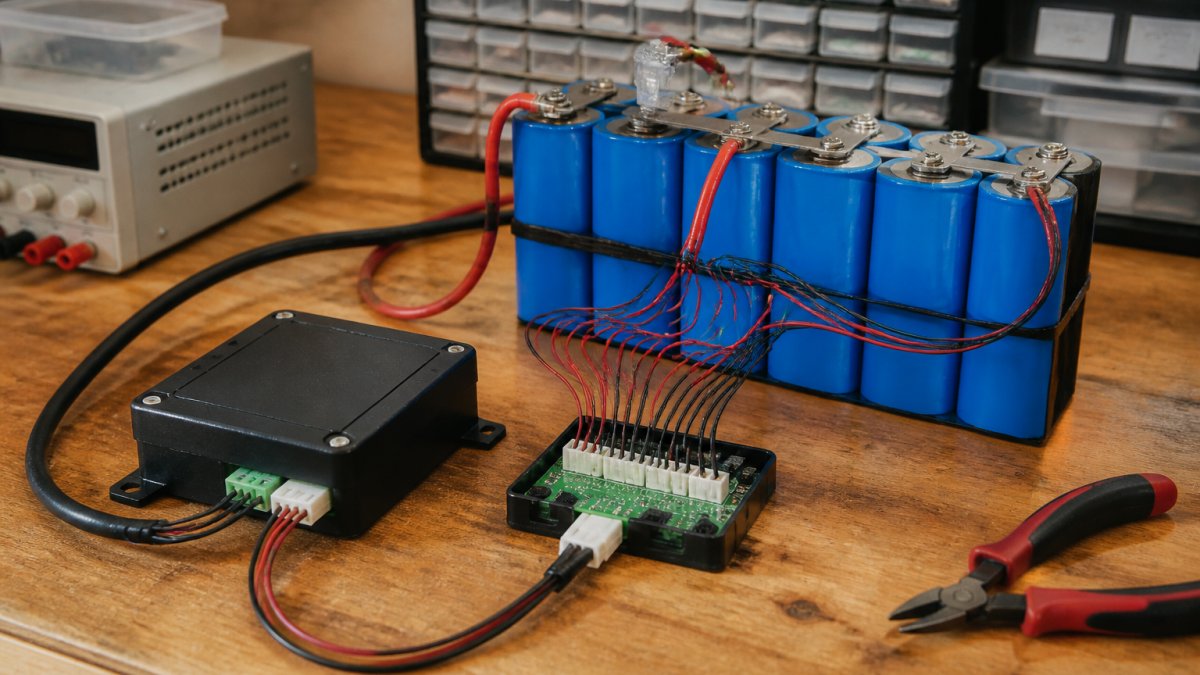
A battery management system (BMS) monitors each battery separately. The lithium BMS watches for overcharge, over-discharge, and thermal issues specific to lithium; the AGM BMS (if equipped) does the same for lead-acid. The two units never communicate and operate independently.
Safe Wiring, Isolation, and Protection Requirements
Keeping batteries separate requires deliberate electrical isolation. This is not optional, it's the foundation of a safe mixed-chemistry system.
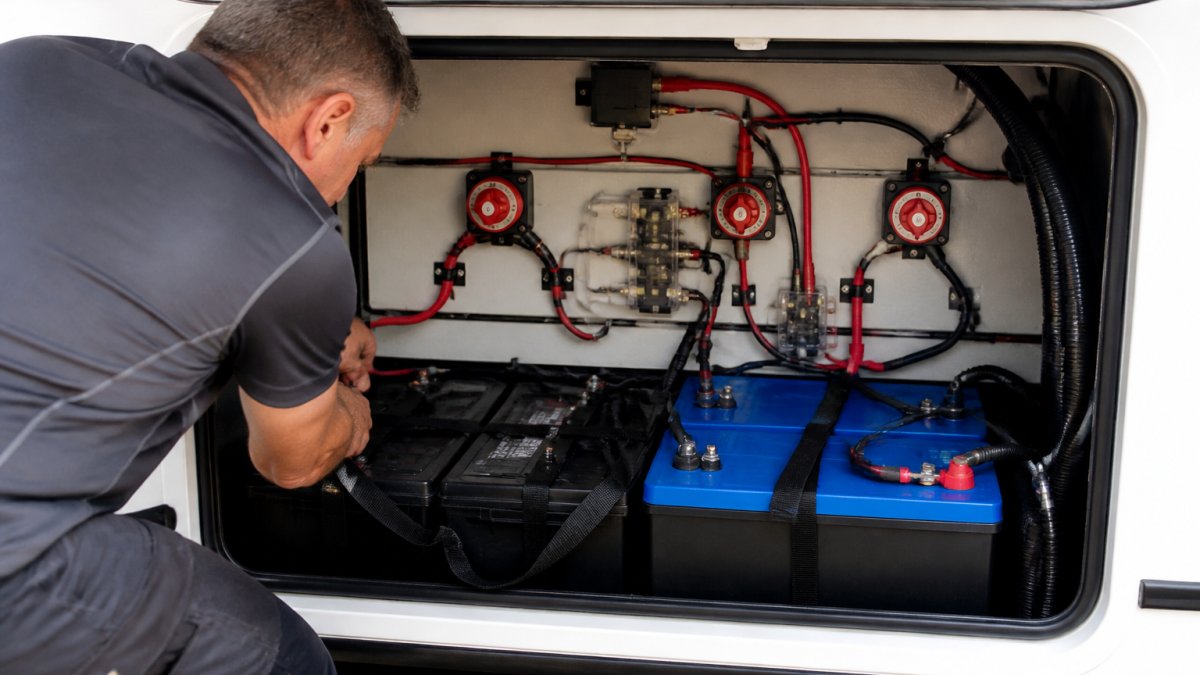
Separate Battery Banks and Isolation Switches
Each battery type should live in its own battery bank, a physically and electrically separate group of batteries. The lithium bank sits in one location. The AGM bank sits in another.
An isolation switch (also called a battery disconnect or battery cutoff switch) sits between each battery bank and the main bus.
This isolation prevents current from flowing between banks at different voltages, lets you service one bank without affecting the other, and provides a safety cutoff if a battery fails or overheats.
Install the isolation switch as close to the battery as possible, ideally within 18 inches. This minimizes the length of unprotected wiring.
Fusing, Overcurrent Protection, and BMS Integration
Each battery bank needs a fuse or breaker immediately after the isolation switch to protect the wiring from overcurrent during a short circuit.
For a lithium battery bank, the fuse should be rated for the battery's maximum discharge current. For an AGM bank, size it similarly. A typical 100Ah lithium battery might use a 150A fuse.
The battery management system (BMS) sits between the fuse and the battery, monitoring voltage, current, and temperature.
For AGM batteries without a built-in BMS, install a battery monitor that tracks voltage and state of charge. This gives you visibility into the battery's condition so you can catch problems early.
Equipment Compatibility Checklist and Troubleshooting
Your inverter, alternator, solar charger, and other equipment must work with your battery chemistry. Mismatched equipment causes problems that are hard to diagnose.
Alternators, Inverters, and Charger Compatibility
An alternator charges the battery when the engine runs. Most standard alternators output 13.5V to 14.5V, suitable for AGM but often too low for optimal lithium charging.
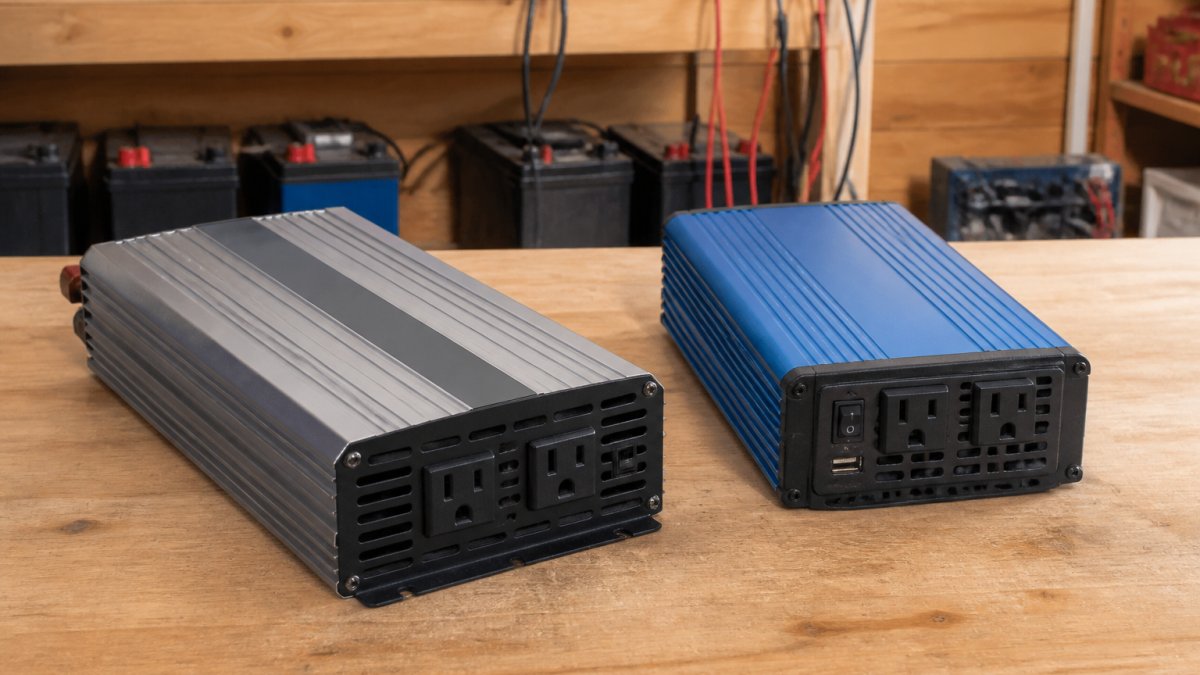
An inverter converts DC to AC for household appliances. Most work with any 12V chemistry, but a low-voltage cutoff set to 10.5V may cut off a lithium battery prematurely (lithium shouldn't discharge below 10V).
A solar charge controller manages current from solar panels to the battery. MPPT controllers (maximum power point tracking) are smarter than PWM and can be programmed for lithium or AGM profiles.
Warning Signs and What to Monitor
Watch for these warning signs that your mixed-battery system is in trouble:
Rapid voltage drop under load. If voltage sags below 11V at moderate current, internal resistance is too high or batteries are unbalanced. Check that batteries are not connected in parallel.
One battery discharges faster than the other. If lithium empties while the AGM still has charge, they may be in parallel.
Battery overheating during charging. If either battery gets hot to the touch, charger voltage is too high or the battery is faulty. Stop charging immediately and investigate.
Charger or BMS alarm lights. These indicate a fault condition. Don't ignore them.
Sulfation or corrosion on battery terminals. White or blue crusty buildup means current is leaking between batteries. Clean the terminals and verify isolation switches are working.
Mixing lithium and AGM batteries creates electrical conflicts that damage both batteries and shorten system life.
Frequently Asked Questions
Can you connect lithium and AGM batteries in parallel?
Direct parallel connection is not recommended. Lithium and AGM batteries have different voltage profiles and charging requirements. In parallel, they will share current unequally due to differences in internal resistance and state of charge. This causes overcharging of one battery type, voltage sag, and potential thermal damage. If you need both battery types, keep them in separate banks with isolated chargers and a battery management system.
What happens if you mix lithium and AGM batteries in one bank?
Mixing them causes several problems: the charger cannot satisfy both chemistry profiles simultaneously, one battery will overcharge while the other undercharges, internal resistance differences force unequal current sharing, and thermal stress accelerates degradation. Additionally, a single charger designed for one chemistry will damage the other. This shortens battery life significantly.
Can an AGM battery charger charge a lithium battery?
No. AGM chargers use a three-stage profile (bulk, absorption, float) with a maximum voltage around 14.4-14.8V for 12-volt systems. Lithium batteries require a constant-current/constant-voltage (CC/CV) profile with a lower float voltage, typically around 13.6V. Using an AGM charger on lithium will overcharge the lithium cells, causing permanent damage, reduced capacity, and thermal runaway risk. Always use a charger matched to your battery chemistry.
How do you charge separate lithium and AGM battery banks?
Use dedicated chargers for each bank: an AGM-specific charger for your lead-acid batteries and a lithium-compatible charger (with BMS communication if available) for your lithium bank. If charging from an alternator, install a DC-to-DC charger between the alternator and each battery bank to regulate voltage independently. This ensures each battery receives the correct charge profile, maximizes lifespan, and prevents cross-contamination of voltage signals.