 Listicle
7 Best Lithium Batteries for Cold Weather Tested
Quick Summary
The best lithium batteries for cold weather are those with low-temperature charging protection or self-heating, such as RELiON LT Series, LiTime Cold-Weather Collection and Redodo 12V 100Ah Self-Heating. Check each spec sheet's minimum charging temperature, because most lithium batteries should not be charged below 32°F without built-in heating.
- Most lithium batteries should not be charged below 32°F unless they have built-in heating or low-temperature protection.
- Batteries can often discharge in the cold, though usable capacity drops, so plan for less runtime.
- RELiON says its LT Series can charge down to -4°F, per the manufacturer.
- Check battery temperature, not air temperature, before charging in winter.
- Ionic Lithium Batteries report about 2% self-discharge per month, suited to off-season storage.
Table of Contents
- Why Cold Weather Changes How Lithium Batteries Perform
- How We Evaluated These Lithium Batteries for Cold Weather
- Best Lithium Batteries for Cold Weather: Side-by-Side Comparison
- Charging Lithium Batteries in Cold Weather Safely
- How to Keep Lithium Batteries Warm in Winter
- Why LiFePO4 Battery in Cold Weather Needs Special Attention
- Storing Lithium Batteries in Cold Weather and Choosing Your Winter Setup
- Frequently Asked Questions
Why Cold Weather Changes How Lithium Batteries Perform
Last Updated: November 5, 2026
Cold weather is the fastest way to find out whether a lithium battery can handle your setup. A battery that runs fine in July can refuse to charge at 32°F, and the reason is chemistry, not manufacturing defects. Cold-weather problems with lithium batteries often come down to temperature rather than the battery itself.
Lithium-ion batteries behave differently below freezing, and the difference matters more for charging than for discharging. A review of lithium-ion batteries in hybrid and electric vehicles operating at low temperatures found that cold conditions reduce performance and change how these cells age (Lithium-Ion Batteries under Low-Temperature Environment review by H. Luo and colleagues). The practical takeaway is simple: a cold battery can often power your loads, but it may not accept a charge safely.
Charging versus discharging limits below freezing
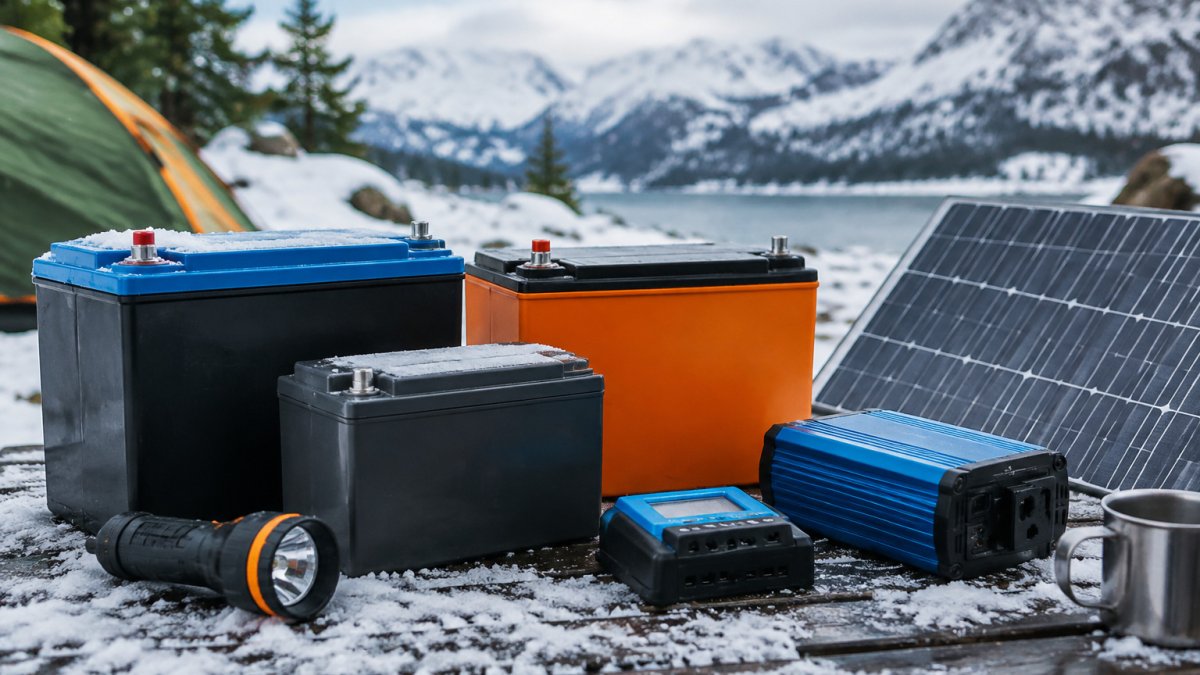
Most cold-weather problems come down to charging. Many lithium battery manufacturers say the battery should not be charged below 32°F unless it has built-in heating or low-temperature protection. Some lines are marketed for charging below freezing, while others are not, so the spec sheet is the first thing to check.
Discharging is usually more forgiving. A battery may deliver power in the cold while its usable capacity drops. If your loads are light, that reduction may not matter much. If you run a furnace fan, a fridge and lights through a cold night, plan for less runtime than the label suggests.
Watch out: a battery that appears to work in the cold may not accept a charge. If your charge controller or alternator is not delivering current, check battery temperature before blaming the charging equipment.
How We Evaluated These Lithium Batteries for Cold Weather
This list reflects published specifications and manufacturer claims rather than our own bench testing.
When comparing cold-weather batteries, look at charging temperature protection, self-heating, documented temperature limits, application fit and how clearly the spec sheet shows capacity, voltage and limits. None of these replaces checking the exact model you plan to buy.
Best Lithium Batteries for Cold Weather: Side-by-Side Comparison
The table below summarizes the options reviewed. Where a manufacturer publishes a specific number, it is listed. Where the spec sheet is silent, that is noted. Confirm current prices with each seller or with Victron Guy before you buy.
| Battery | Chemistry | Usable Capacity | Min. Charging Temp. | Discharge Range | Heater | Warranty | Best For |
|---|---|---|---|---|---|---|---|
| RELiON LT Series | LiFePO4 | Model-dependent | Can charge down to -4°F (per manufacturer) | Not stated in supplied details | Not stated | Not stated in supplied details | Buyers wanting a cold-charging lithium line |
| LiTime Cold-Weather Collection | LiFePO4 | Model-dependent | Varies by model; low-temp protection or self-heating on select models | Varies by model | On select models | Not stated in supplied details | RV, boat, trolling-motor and solar buyers comparing several options |
| Redodo 12V 100Ah Self-Heating | LiFePO4 | 100Ah (12V) | Self-heating; activation threshold not stated | Not stated in supplied details | Yes (self-heating) | Not stated in supplied details | Buyers who want self-heating in a standard 12V battery |
| Ionic Lithium Batteries | Lithium-ion | Model-dependent | Not stated in supplied details | Not stated in supplied details | Not stated | Not stated in supplied details | Storing batteries through the off-season (about 2% self-discharge per month) |
| Energizer AA Lithium (2-pack) | Lithium (primary) | Not applicable (AA cells) | Not applicable | Rated for extreme cold | No | Not stated in supplied details | Small cold-weather devices, not battery banks |
1. Victron Guy: our top pick for buyers who want expert setup support. Victron Guy is an authorized Victron Energy dealer, which matters when a cold-weather system needs proper charging and monitoring. We carry batteries, solar charge controllers, inverters and monitoring systems, so you can build the whole system with one set of specifications.
2. RELiON LT Series. The manufacturer specifically positions this line for cold weather and says it can charge at low temperatures. The exact minimum charging temperature is not confirmed in the supplied details, so verify it before you buy.
Best for: buyers who want a lithium line made for cold charging. Skip if: you need model-level capacity and voltage details before purchase.
3. LiTime Cold-Weather Collection. This collection includes options with low-temperature protection or self-heating, and the manufacturer lists RVs, boats, trolling motors and solar storage as use cases. Limits differ between models, so compare the specific battery.
Best for: RV, boat, trolling-motor and solar-storage buyers comparing several cold-weather options. Skip if: you want one clear temperature rating across the whole range.
4. Redodo 12V 100Ah Self-Heating Lithium Battery. This is a 12V, 100Ah battery identified as self-heating. A separate listing reports a weight of 23.32 lb. The self-heating activation temperature is not stated in the supplied details.
Best for: buyers who want self-heating in a standard 12V battery. Skip if: you need the self-heating threshold documented before you buy.
5. Ionic Lithium Batteries. The source reports low storage discharge of about 2% per month and describes the batteries as leakproof. Model-specific cold temperature limits were not provided.
Best for: storing batteries through the off-season. Skip if: you need active cold-charging performance for winter use.
6. Energizer AA Lithium Battery (2-pack). The retailer recommends these for extreme cold climates and reports about 10% self-discharge per year. These are AA cells for small devices, not a substitute for a 12V or larger battery bank.
Best for: small cold-weather devices. Skip if: you are powering an RV, boat or off-grid system.
For context on cold-weather lithium use, the research also surfaces a contrarian view: one forum participant argued that flooded lead-acid may be preferable below zero, and CBS News reports that cold can make rechargeable lithium-ion batteries harder to charge and may increase fire risk (CBS News report on lithium-ion batteries in the cold). Those points are a reason to match the battery to your conditions, not to avoid lithium altogether.
Charging Lithium Batteries in Cold Weather Safely
Charging is where cold-weather mistakes cost money. Before you charge, check battery temperature, not just air temperature. A battery sitting in a freezing compartment can be far colder than the room you are standing in.
Follow these steps:
- Confirm the battery's minimum charging temperature in its spec sheet.
- If it has no low-temperature protection or heater, bring it into a warmer space before charging.
- Use a charger built for lithium chemistry and check that its charge profile matches the battery.
- Monitor the first charge cycle in cold weather so you can catch any problem early.
Setup questions are part of what we handle, so reach out before you wire a cold-weather system. Learn how the charge profile changes with voltage and temperature in how lithium charging profiles work.
How to Keep Lithium Batteries Warm in Winter
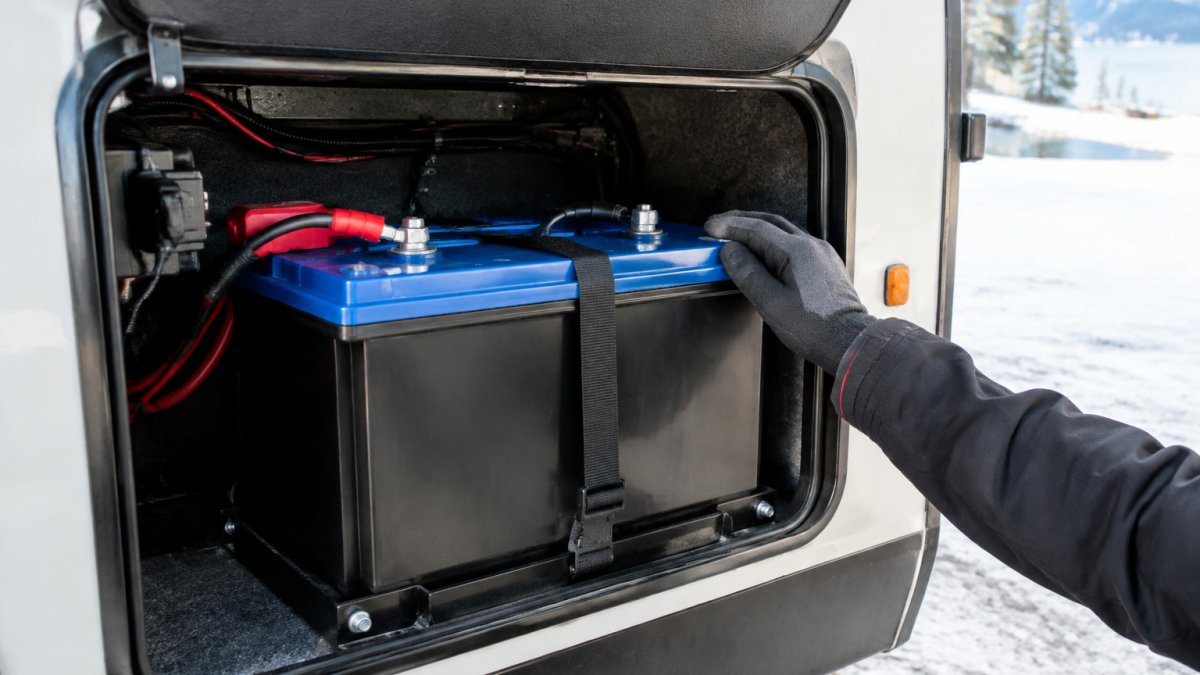
Keeping a battery warm is often easier than replacing one. Options include built-in self-heating batteries, insulated enclosures, and placing the battery in a space that stays above freezing. A battery that is kept warm can charge when your solar panels or alternator are producing power.
Good practices:
- Mount the battery inside the heated living space when possible, not in an exterior compartment.
- Use insulation around an enclosure without blocking ventilation.
- Choose a self-heating model if the battery must live outside the heated area.
Ventilate any enclosure. Lithium batteries should not be kept in sealed boxes where heat or gas could build up.
Why LiFePO4 Battery in Cold Weather Needs Special Attention
LiFePO4 (lithium iron phosphate) is a common chemistry in RVs, boats and solar systems because it is stable and long-lasting. Cold weather still demands attention, and the reason is specific to how the cells and the battery management system (BMS) interact below freezing.
Charging a lithium cell below freezing can cause lithium plating on the anode, which reduces usable capacity over time. That is why many LiFePO4 manufacturers specify a minimum charging temperature, and why a battery management system (BMS) with low-temperature protection may block charge current when its sensor reads below that threshold. Discharging is often permitted at lower temperatures, though usable capacity may drop.
A battery may still power loads in the cold while not accepting a charge. If your solar charge controller or alternator is not delivering current, check battery temperature before blaming the charging equipment.
Watch out: a LiFePO4 battery that is not heated or protected can be damaged by charging when it is too cold. Confirm the cold-charge behavior of the exact model before you rely on it.
Storing Lithium Batteries in Cold Weather and Choosing Your Winter Setup
Storage is the quiet part of cold-weather planning. A battery left unused for months still discharges slowly, and extreme cold can add stress. Store batteries in a dry, protected space, and top them up before long storage periods, following the manufacturer's guidance.
Your winter setup should match how you use the battery. Ask these questions before you buy:
- Will the battery sit in an unheated compartment?
- Do I need to charge in freezing weather, or only discharge?
- Will I run heavy loads like a furnace fan or fridge overnight?
Our team can help you think through your load, location and existing wiring. Support is available by phone, text, email and in person to help you troubleshoot.
Contact Victron Guy to talk through a cold-weather battery for your system. Our authorized Victron Energy setup support helps you pick the right components and enjoy free shipping on Victron products.
Frequently Asked Questions
Which lithium battery is best for cold weather?
For most RV, boat and off-grid buyers, a LiFePO4 battery with built-in low-temperature charging protection or self-heating is the strongest starting point. Models such as the LiTime cold-weather collection and the Redodo 12V 100Ah self-heating battery are marketed for cold-weather use. Confirm the exact charging cutoff on the spec sheet before buying, since the sources reviewed do not state it for every model. Victron Guy can help you match a battery to your charging equipment. For current prices, contact Victron Guy or visit its website for a quote.
Do lithium batteries work well in cold weather?
They can, but cold affects them differently depending on whether you are charging or discharging. Many lithium batteries can deliver power at low temperatures but should not be charged below freezing unless they have internal heating or low-temperature protection. Some manufacturers, such as RELiON with its LT Series, state that their batteries can charge at sub-freezing temperatures. Check the charge temperature rating before assuming a battery is safe for winter use.
Can you charge a lithium battery in freezing temperatures?
Only if the battery is designed for it. Guidance from installers commonly advises against charging standard lithium batteries below 32°F without internal heaters, because charging a cold cell can cause lithium plating and reduce its life. Batteries with self-heating or low-temperature charge protection can safely charge below freezing. Bring a battery indoors or let it warm up before charging whenever possible.
How should you store lithium batteries in cold weather?
Store lithium batteries at a partial state of charge in a dry location that stays above freezing if possible. Ionic lithium batteries, for example, are reported to lose about 2% of their charge per month in storage, so periodic top-ups matter. Disconnect loads, keep terminals clean, and recheck voltage every few months. If the battery cannot be kept warm, remove it from the vehicle or boat and store it indoors.