 how-to
Will Solar Systems Work With Old Wiring? A 2026 Guide
Table of Contents
- Will Solar Systems Work With Old Wiring? The Short Answer
- How to Inspect Home Wiring for Solar Compatibility
- Signs of Failing Wiring That Block Solar Installation
- Main Panel Upgrade for Solar: When It's Required
- NEC Solar Wiring Guidelines You Need to Know
- Cost-Benefit: Panel Upgrade vs. System Downsizing
- Insurance and Code Compliance Implications
- Conclusion
- Frequently Asked Questions
Last Updated: October 2, 2026
Will Solar Systems Work With Old Wiring? The Short Answer
Will solar systems work with old wiring? Yes, but only after an electrician confirms the existing circuits can handle the added load. Solar systems work with old wiring when the panel, insulation, and grounding are sound. When they are not, the system fails inspection or becomes a fire risk. Below, we break down exactly what to check before you connect a single panel.
How to Inspect Home Wiring for Solar Compatibility
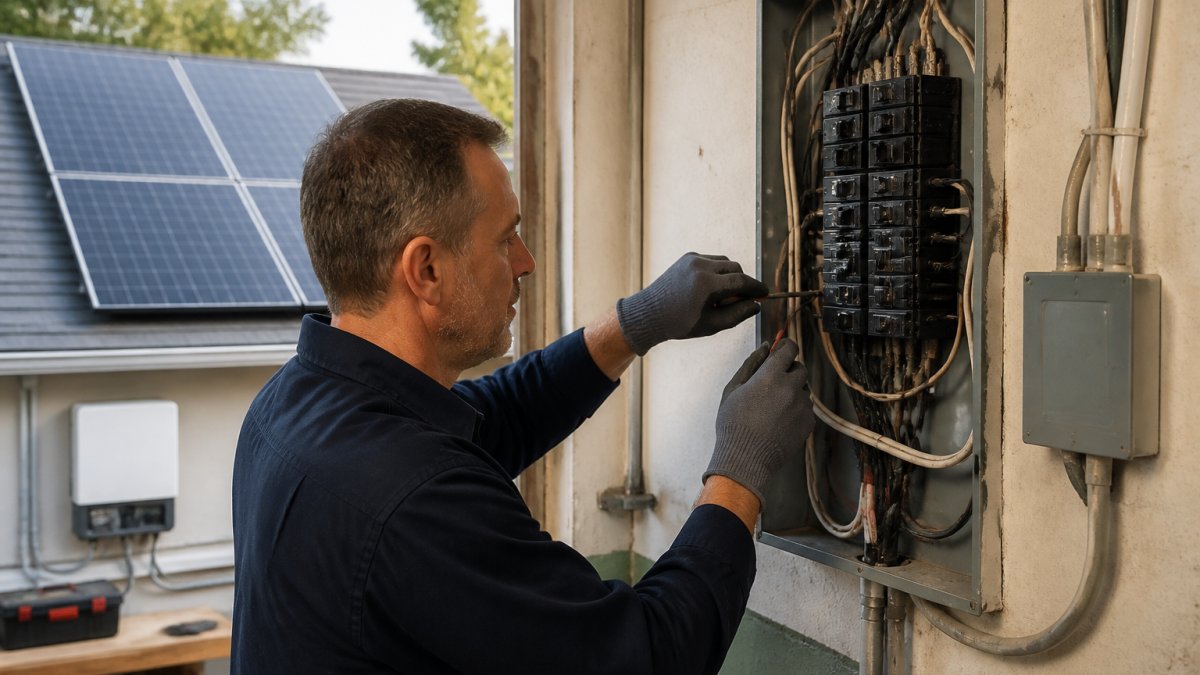
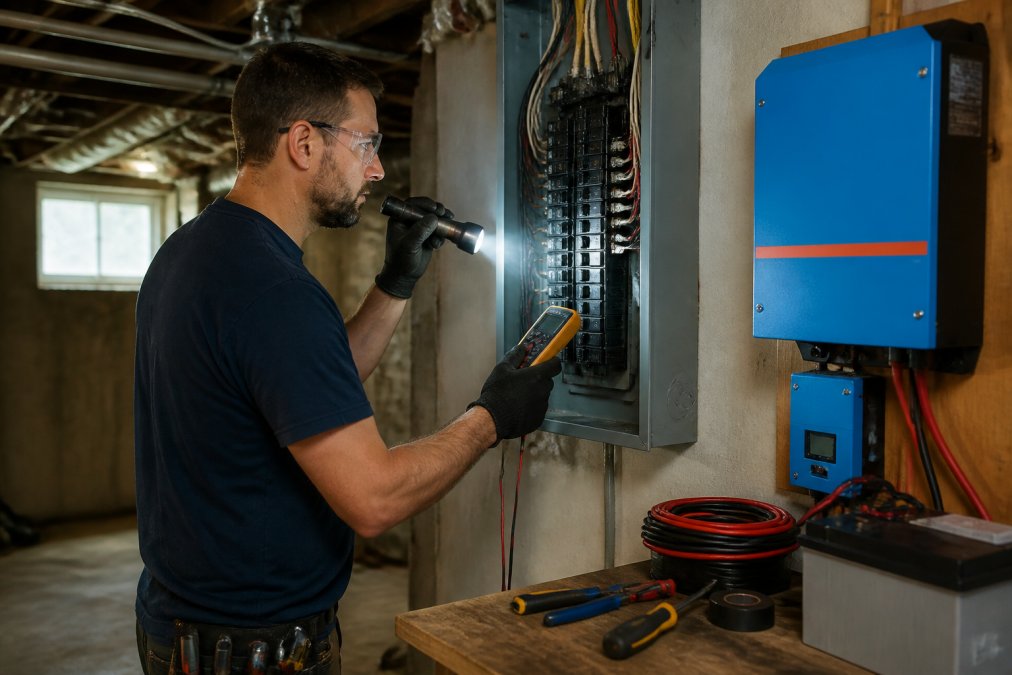
Inspecting home wiring for solar compatibility means checking the panel, the wire gauge, the insulation, and the grounding before any panels go up. This is not a job for a visual glance. It requires testing under load.
What a Licensed Electrician Checks
A licensed electrician runs a specific set of tests. They check the load capacity of your main breaker. They measure voltage drop across long wire runs. They inspect wiring insulation for cracks, brittleness, and heat damage. They verify grounding and bonding. They also check the junction box connections for corrosion.
DIY Visual Checklist
You can spot red flags yourself before calling anyone. Look for these signs:
- Breakers that trip when you run two large appliances
- A fuse panel instead of a breaker box
- Wires that feel warm or look discolored
- A burning smell near outlets or the panel
- Flickering lights when the AC kicks on
- Cloth or aluminum wiring instead of copper
Signs of Failing Wiring That Block Solar Installation
Failing wiring blocks solar installation because it cannot safely carry the extra current. The most common blockers are circuit breaker trips, warm outlets, and a panel with no open slots. Any of these means the system stops at the design stage.
Watch for these red flags:
- Buzzing from the panel or outlets
- Heat at switch plates or breaker handles
- Flickering lights when large loads turn on
- Scorch marks or melted insulation
- A breaker box that is full with no spare slots
Main Panel Upgrade for Solar: When It's Required
A main panel upgrade for solar is required when your existing panel cannot handle the added amperage or has no space for a dedicated solar breaker. Most residential panels come in 100-amp or 200-amp sizes. Solar backfeed rules under the NEC limit how much current you can push back through the main breaker.
You need an upgrade when:
- Your panel is rated below 200 amps and you want a large array
- There are no open breaker slots
- The panel is a known recalled brand
- Your utility requires a line-side tap or new meter
| Situation | Best Move | Why |
|---|---|---|
| 200A panel, open slots, modern wiring | Add solar directly | No upgrade needed |
| 100A panel, full slots | Upgrade panel or downsize system | Backfeed limit blocks full array |
| Fuse panel or cloth wiring | Full rewire first | Safety and code compliance |
| Off-grid cabin, no grid tie | Isolated subpanel | Avoids utility interconnect rules |
NEC Solar Wiring Guidelines You Need to Know
NEC solar wiring guidelines govern how solar circuits are sized, grounded, and protected. The National Electrical Code sets the rules for conductor sizing, overcurrent protection, and disconnect placement. Local inspectors enforce these rules, and your utility will not approve an interconnect without them.
Key Articles for Old Wiring
The articles that matter most for older homes are:
- Article 690 covers solar photovoltaic systems
- Article 705 covers interconnections with power sources
- Article 250 covers grounding and bonding
- Article 310 covers conductor sizing and wire gauge
If your home has aluminum branch wiring, Article 310 and 250 checks matter even more. Aluminum expands and contracts differently than copper. That leads to loose connections and heat over time. The NFPA 70 National Electrical Code overview is the starting point for any inspector.
Cost-Benefit: Panel Upgrade vs. System Downsizing
Here is how the two paths actually compare:
- Path A, Upgrade the panel. You move to a 200-amp service, gain open slots, and can size the array to your roof and usage. You pay for the panel, the permit, the utility disconnect/reconnect, and the inspection. You also lose a day or two of power during the swap.
- Path B, Downsize the array. You stay on the existing panel and cap the backfeed breaker at the 120% limit. You save the upgrade cost but permanently cap production. On a 100-amp panel, that often means a 4-5 kW system instead of the 8-10 kW the roof could hold.
- A line-side tap can sometimes dodge the 120% rule by connecting ahead of the main breaker. It is legal under Article 705 but requires utility approval and a licensed electrician, and not every utility allows it. Ask before you assume it is an option.
- A supply-side connection or a separate solar subpanel can isolate the array from the main busbar entirely. This is common on off-grid cabins and detached workshops where no utility interconnect is involved, and it sidesteps the backfeed limit completely.
If your panel is a recalled brand (Federal Pacific Stab-Lok and Zinsco are the two names that come up most), the upgrade decision is made for you. No inspector will sign off on a new solar tie-in to a panel with a known failure history, and no reputable insurer will cover it.
Insurance and Code Compliance Implications
- No permit pulled. The installer skips the jurisdiction's permit to save time or money. There is no inspection record, so there is no proof the work met NEC. This is the single most common coverage-killer.
- Permit pulled but final inspection never closed out. The work passed rough-in but the final sign-off was never scheduled. On paper, the job is still open. Insurers treat an open permit the same as no permit.
- DC-side wiring run through the attic or wall cavity without rapid shutdown. NEC Article 690.12 requires rapid shutdown for rooftop PV so first responders can de-energize the array. Older homes with no rapid shutdown equipment fail this, and some insurers now ask about it directly.
- Aluminum branch-circuit wiring tied into the solar circuit. Aluminum expands and contracts differently than copper, and the connection points loosen over time. Article 310 and Article 250 govern conductor sizing and grounding here, and a loose aluminum termination is a known fire mechanism. Many insurers will not write a new policy on a home with aluminum branch wiring at all, solar or not.
- Knob-and-tube wiring left in place and energized. Knob-and-tube has no equipment ground. A solar inverter needs a proper grounding electrode system, and you cannot retrofit a ground onto knob-and-tube without rewiring the circuit. Some insurers will cover a home with knob-and-tube if it is decommissioned; almost none will cover it if it is still carrying current alongside a new PV system.
The paper trail that protects you:
- Confirm in writing that the installer will pull the permit before any work starts.
- Get the final inspection sign-off document, not just a verbal confirmation.
- Send the signed-off permit and the inspection report to your insurer and ask them to confirm coverage in writing.
- Ask specifically whether the policy covers roof-mounted solar and whether the dwelling limit needs to be raised to reflect the added system value.
A safety inspection before you buy panels is the cheapest insurance you can buy. It costs a few hundred dollars, it satisfies the code path, and it keeps your coverage intact. Skipping it saves that fee and risks the entire structure.
Conclusion
Old wiring does not automatically kill a solar project. It just changes the plan. The right first step is a real inspection, not a guess.
Frequently Asked Questions
Does installing solar require a full home electrical rewire?
Not always. Many older homes can support solar without a full rewire if the existing wiring passes inspection and the main panel has enough capacity. The NEC requires that all added electrical work meet current code, but it does not automatically trigger a whole-house rewire. A licensed electrician will check insulation condition, grounding, and load capacity. If the wiring is degraded or undersized, partial rewiring may be needed. In most cases, a main panel upgrade or dedicated solar circuit is sufficient.
How do I know if my electrical panel can handle a solar installation?
Start by checking the panel's busbar rating and main breaker size. The NEC 120% rule limits backfed solar to 20% of the busbar rating. For example, a 200-amp panel with a 200-amp main breaker allows up to 40 amps of solar. You also need open breaker slots and no signs of overheating. A licensed electrician can perform a load calculation and thermal imaging to confirm capacity. If the panel is a fuse box or has no main breaker, an upgrade is typically required.
What are the fire risks of connecting solar to outdated electrical systems?
Outdated wiring with brittle insulation, aluminum conductors, or loose connections can overheat when solar adds continuous current. Arcing at poor junctions is a leading cause of electrical fires. Solar systems also introduce DC power, which arcs more easily than AC. The NEC requires rapid shutdown and arc-fault protection for rooftop solar. Before installing, a safety inspection should check torqued connections, insulation resistance, and proper grounding. Replacing damaged sections reduces fire risk significantly.
Do I need a main panel upgrade for solar?
You need a main panel upgrade for solar if your existing panel cannot accommodate the solar breaker under the NEC 120% rule, has a fuse box, or is rated below 100 amps. Many older homes have 60-amp or 100-amp panels that are already fully loaded. Upgrading to a 200-amp panel with a dedicated solar breaker is common. The cost varies by region and utility requirements, so get a quote from a licensed electrician. Some utilities also require a visible disconnect.