 ultimate-guide
Why Choose Victron for Marine Power
Table of Contents
- What Makes Victron Stand Out for Marine Power Systems
- Core Components of a Victron Marine Power System
- Victron Inverter Charger Sizing Guide
- Integrating Shore Power, Solar, and Generators
- Victron VRM Portal Features for Power Management
- Victron vs Renogy Marine Comparison
- Saltwater Durability and Real-World Performance
- Why Victron Wins for Your Vessel
- Frequently Asked Questions
Last Updated: October 9, 2026
What Makes Victron Stand Out for Marine Power Systems
When you're running a marine vessel, your electrical system isn't just a convenience, it's survival infrastructure.
Victron's marine systems are built on a philosophy of integration. Rather than selling you isolated components that technically work together, Victron designs batteries, inverters, charge controllers, and monitoring tools as a cohesive ecosystem. This matters because marine environments are hostile, saltwater corrosion, extreme temperature swings, constant vibration, and unpredictable power demands all work against you simultaneously. At Victron Guy, we've seen systems fail because one component couldn't handle what the others were asking of it.
The real distinction isn't flashy marketing. It's that Victron invests in the infrastructure that keeps systems running long-term. Their VRM Portal gives you real-time monitoring from anywhere. Their battery management systems communicate with charge controllers to prevent overcharging. Their inverter/chargers handle shore power, solar, and generator inputs without requiring manual intervention. These aren't features bolted onto a basic design, they're foundational to how the system works.
Core Components of a Victron Marine Power System
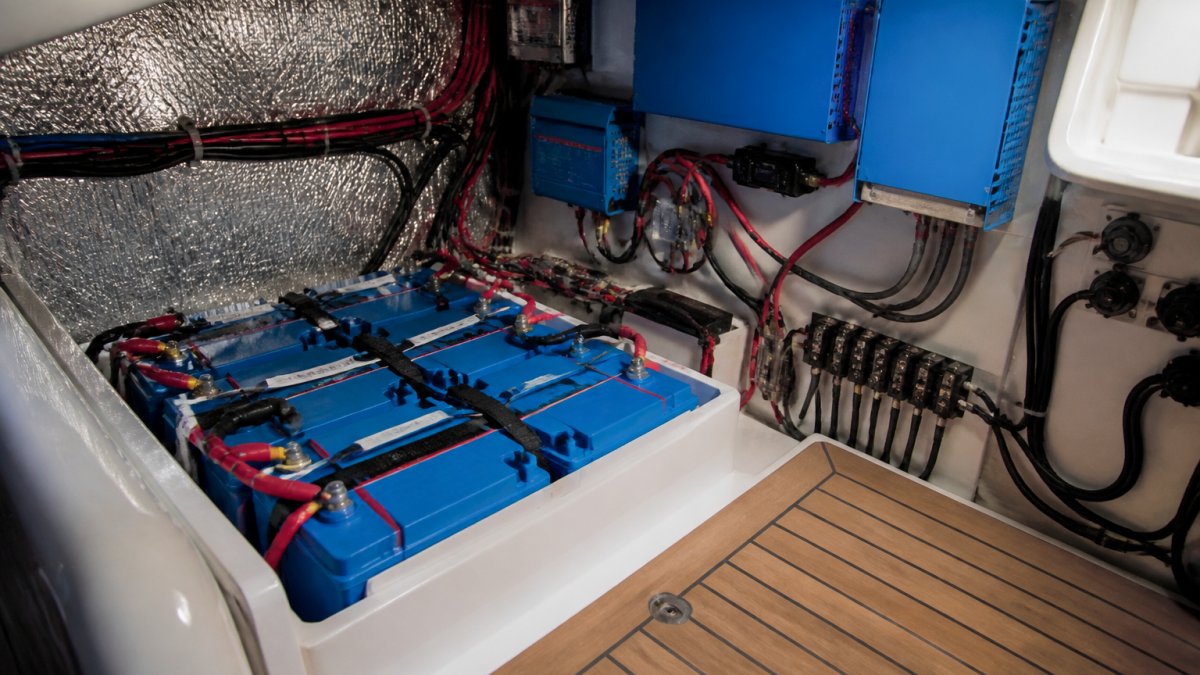
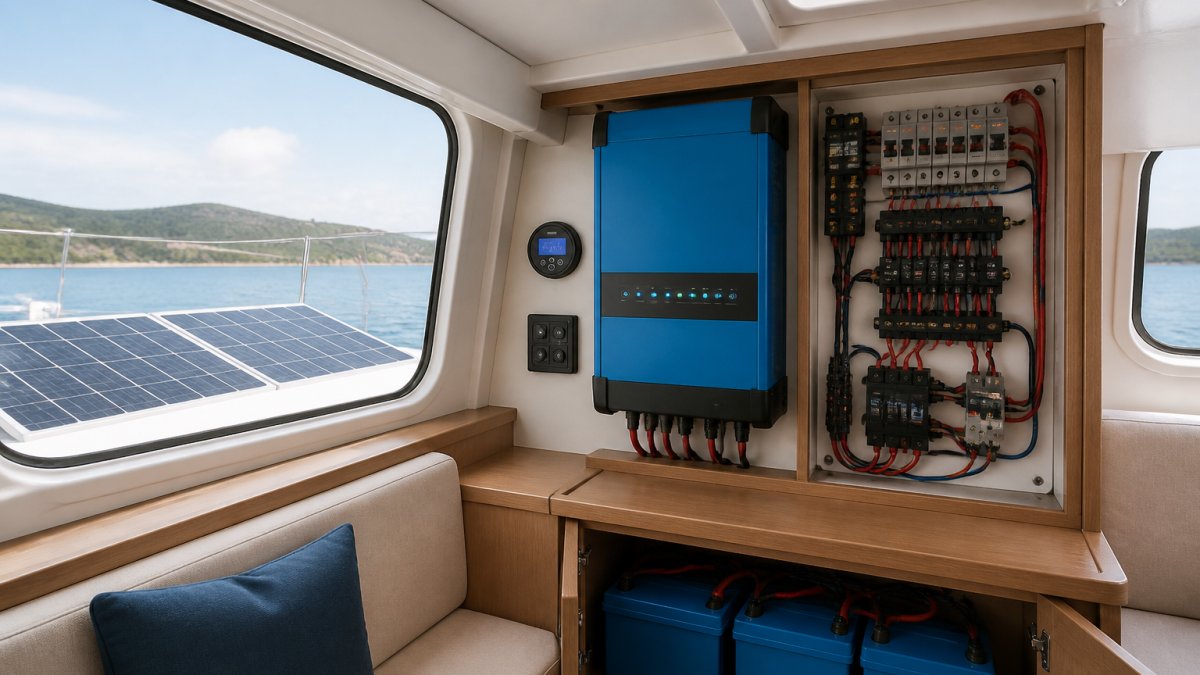
A Victron marine power system consists of four interdependent layers: energy storage, conversion, charging, and monitoring. Each layer must perform flawlessly in isolation and communicate seamlessly with the others.
Battery Storage and Capacity
Your battery bank is the foundation of everything. Victron offers both lithium (LiFePO4) and lead-acid options, but the choice isn't arbitrary, it determines how your entire system behaves.
LiFePO4 batteries from Victron deliver consistent voltage across their discharge cycle, meaning your AC inverter runs appliances at stable power. They accept charge faster than lead-acid, which matters when you're trying to top up before leaving the dock. They survive deep discharge cycles without degradation, so you can actually use the full capacity without shortening battery life. The trade-off is cost, lithium batteries command a premium.
Capacity sizing depends on your consumption pattern. A vessel running occasional cabin lights and navigation electronics needs far less storage than one powering air conditioning, a galley, and a full office setup. The math is straightforward: calculate your daily amp-hour consumption, multiply by the number of days you want to run without charging, then divide by your desired depth of discharge (typically 80% for lithium, 50% for lead-acid). That gives you your minimum battery bank size.
Inverter and Charger Selection
An inverter/charger does exactly what its name suggests: it converts DC battery power to AC for your appliances, and it converts incoming AC power (from shore power or a generator) back to DC to charge your batteries.
Sizing comes down to two specifications: continuous power rating and surge capacity. Your continuous rating must handle your largest simultaneous loads. If you're running a 3,000-watt AC unit and a 1,500-watt water heater together, you need at least 4,500 watts continuous. Surge capacity must exceed the peak inrush current of your largest single load.
The charger side matters equally. Victron inverter/chargers can pull 50-120 amps from shore power or a generator, depending on the model. This speed of charging determines how quickly you can top up your batteries when you're docked. A faster charger also means you're less dependent on generator runtime to maintain full capacity.
Solar Charging and Charge Controllers
Solar panels generate DC power, but feeding that power directly into your batteries would destroy them. A charge controller regulates the voltage and current flowing from panels to batteries, preventing overcharge while maximizing power harvest.
Victron's MPPT (Maximum Power Point Tracking) controllers are the industry standard for marine use. They continuously adjust their input voltage to match the solar array's optimal operating point, extracting up to 30% more power than simpler PWM (Pulse Width Modulation) controllers. For a marine system where deck space is limited and every watt counts, that efficiency difference is real.
Sizing the controller depends on your panel array's maximum current output. A 400-watt solar array in full sun generates roughly 12-15 amps at 48 volts. You'd pair that with a Victron MPPT 150/45 controller (45-amp capacity). Oversizing the controller is fine, it simply won't push more current than the panels can generate. Undersizing it will limit your charging speed and leave solar power on the table.
Victron Inverter Charger Sizing Guide
The Victron inverter charger sizing guide starts with two questions: What's your peak simultaneous load, and how fast do you need to charge your batteries?
Peak load determines your continuous power rating. List every device that might run at the same time: air conditioning, water heater, microwave, refrigerator, navigation electronics, charging stations. Add their wattages. If that sum is 6,000 watts, you need a 6,000-watt minimum inverter. If it's 4,500 watts, a 5,000-watt unit gives you headroom.
Charging speed determines your charger's amp rating. If you want to recover 200 amp-hours of battery capacity in 4 hours from shore power, you need 50 amps of charging current. Victron's 48/5000/70 inverter/charger delivers exactly that, 70 amps of charger capacity. The larger the charger, the faster you can top up before departure.
Most marine vessels benefit from a 3,000-5,000 watt continuous inverter with 30-70 amps of charger capacity. Smaller cruising sailboats often run 2,000-3,000 watts. Large motor yachts may need 8,000+ watts. The key is matching the inverter size to your actual loads, not guessing.
Integrating Shore Power, Solar, and Generators
A complete marine power system doesn't rely on a single source. Shore power charges your batteries when docked. Solar maintains charge while underway. A generator provides backup when weather or consumption outpaces solar generation.
Victron inverter/chargers manage this automatically. When you plug into shore power, the charger activates and tops up your batteries while simultaneously powering AC loads directly from shore. When you unplug, the inverter takes over, drawing from batteries.
A generator connects to the inverter/charger's AC input. The system can be programmed to start the generator automatically when battery voltage drops below a threshold, run it until batteries reach full charge, then shut it down. This prevents unnecessary runtime and fuel consumption while ensuring you never lose power.
The integration point is critical. Victron's components communicate via VE.Bus (a proprietary protocol), allowing the inverter to coordinate with the battery monitor and MPPT controller. If your battery voltage is low and your generator is running, the inverter knows to charge at maximum amps. If solar is abundant, the inverter reduces generator demand.
Victron VRM Portal Features for Power Management
The Victron VRM portal features transform your marine power system from a black box into a transparent, monitorable asset. It connects to your onboard Victron equipment via a VE.Bus Smart Dongle or GX device and streams real-time data to your phone or computer.
From VRM, you see your battery voltage, state of charge, charging current, and load draw in real time. You can watch solar production hour by hour. You see generator runtime and fuel consumption. You can set alerts, if battery voltage drops below 48V, you get a notification.
More importantly, VRM gives you historical data. You can analyze your consumption patterns, identify which appliances drain the most power, and optimize your system accordingly. Over weeks and months, you'll see seasonal trends. Summer months show higher solar production.
VRM also enables remote control. You can start or stop your generator from shore. You can adjust charge current settings. You can monitor multiple vessels if you own more than one. For cruising sailors and liveaboards, this visibility is invaluable.
Victron vs Renogy Marine Comparison
Comparing Victron vs Renogy marine systems reveals fundamental differences in design philosophy and integration.
Renogy focuses on affordability and simplicity. Their inverters, charge controllers, and batteries are competent individual components at lower price points. For a basic system powering a small cabin or weekend boat, Renogy equipment works fine. The components function independently without sophisticated communication.
Victron prioritizes integration and long-term reliability. A Victron system grows with you, you can add a battery monitor, upgrade your solar array, or install a second battery bank without replacing the inverter.
The real difference emerges over years of use. A Renogy system might serve a part-time cruiser well. A Victron system serves a full-time liveaboard or professional charter operation because it handles complexity, provides visibility, and survives harsh conditions.
For most serious marine applications, Victron's integration and reliability justify the higher cost. You're not paying for a brand name; you're paying for a system designed to work together seamlessly in an environment that destroys lesser equipment.
Saltwater Durability and Real-World Performance
Marine environments corrode, crack, and corrode again. Victron equipment is built for this reality.
Victron's inverter/chargers use conformal coating on circuit boards to resist salt spray and humidity. Connectors are stainless steel or gold-plated to prevent corrosion. Enclosures are sealed with gaskets that actually remain effective after years of thermal cycling. This isn't standard across the industry, many manufacturers treat marine as an afterthought and apply coastal-rated components to equipment designed for RVs or land-based homes.
Real-world performance data from charter operators and liveaboards shows Victron systems running reliably for years with minimal maintenance.
Ingress protection (IP rating) matters here. Victron's marine-grade equipment carries IP43 or higher ratings, meaning they survive spray and splash. Equipment rated IP20 or IP21 will fail if saltwater gets inside. Check the specifications, if a manufacturer doesn't list an IP rating, they're probably not designing for marine environments.
Why Victron Wins for Your Vessel
Why choose Victron for marine power ultimately comes down to systems thinking. Victron doesn't sell you batteries, inverters, and charge controllers. They sell you a complete power infrastructure designed to work as one organism.
Your inverter communicates with your battery monitor. Your battery monitor talks to your charge controller. Your MPPT controller coordinates with your inverter/charger to optimize solar harvest.
For vessels that demand reliability, whether you're running a charter business, living aboard full-time, or taking extended offshore passages, that integration is non-negotiable.
At Victron Guy, we've equipped vessels with Victron systems. We've provided technical support when customers needed it most, and we've watched the VRM Portal turn confused boat owners into confident power managers.
If you're building a marine power system that needs to work reliably for years, Victron is the foundation worth investing in.
Ready to design a Victron marine power system tailored to your vessel? Victron Guy provides expert technical support via phone, text, email, and in-person consultation to help you select the right components and configure them correctly.
Frequently Asked Questions
How does Victron marine power compare to Renogy systems?
Victron and Renogy both serve marine applications, but differ in focus. Victron prioritizes modular system integration, allowing you to combine multiple energy sources (solar, generator, shore power) with precise power management. Victron's inverter/chargers handle surge loads better for simultaneous AC appliances. Renogy focuses on simplicity and cost. Victron suits complex setups requiring reliability and monitoring; Renogy works for straightforward solar-only systems. Your choice depends on vessel size, power demands, and whether you need advanced monitoring.
Will Victron components work with my existing lithium battery bank?
Yes. Victron inverters, charge controllers, and monitors are compatible with LiFePO4 batteries when properly configured. Victron's charge controllers include lithium-specific settings and communication protocols. The critical step is ensuring your battery management system (BMS) communicates with Victron equipment via CAN-bus or other compatible protocols. Victron's technical team can verify compatibility before installation and help configure the system to protect your expensive battery investment from overcharge or deep discharge damage.
Can Victron inverters handle running an AC unit and kitchen appliances simultaneously?
Yes, if sized correctly. Victron inverter/chargers come in multiple sizes (2000W, 3000W, 5000W+) with surge capacity ratings that exceed continuous output. A 5000W Victron inverter typically handles 15,000W surge for 2-3 seconds, enough to start compressors and motors without tripping. Properly sizing your inverter and battery bank for your peak simultaneous loads prevents breaker trips. Victron's sizing guide helps calculate your total load. If you run both AC and kitchen loads together, you'll need adequate battery capacity and a suitably sized inverter, our technical support can recommend the right configuration for your vessel.
What technical support does Victron Guy provide after purchase?
Victron Guy offers expert technical support via phone, text, email, and in-person assistance. We help with system design, component selection, configuration, and troubleshooting. If you're not a tech person, our team will walk you through setup, explain your system, and answer questions as they arise. We're committed to ensuring your power system works reliably, whether you're at dock or offshore. Response times vary by method, but we prioritize getting you answers quickly so your system stays operational.