 Comparison
Signature Solar Alternatives for RV Power
Table of Contents
- Why RV Owners Switch From Signature Solar
- Understanding RV Solar System Components
- Portable Solar Panels vs. Roof-Mounted Systems
- Top Signature Solar Alternatives for RV Use
- Victron Energy RV Solar System Setup
- RV Solar System Sizing for Your Energy Needs
- Battery Monitoring and System Optimization
- Installed System vs. Portable Power Station
- Frequently Asked Questions
Last Updated: October 16, 2026
Why RV Owners Switch From Signature Solar
When you live full-time in an RV, power isn't optional. Signature Solar has long dominated the RV energy conversation, but that dominance has created a gap: many owners find the signature solar alternative RV solutions don't match their needs, budget, or technical comfort level. They're switching to alternatives with better flexibility, lower entry costs, or deeper support for mobile living.
The shift isn't about Signature Solar being bad. One company's solution won't fit every RV owner: some need portable systems, others want hybrid setups combining roof-mounted and portable panels, and still others need a vendor who understands lithium battery chemistry and charge controller compatibility beyond selling components.
At Victron Guy, we've worked with many RV owners who evaluated various options and moved on. They wanted more control, better installation support, or a different cost-to-capability balance. This guide covers the alternatives solving real problems for full-time travelers now.
Understanding RV Solar System Components
Panels, Inverters, Batteries, and Charge Controllers
An RV solar system is only as good as its weakest link. Most people focus on panels, but the real work happens in three other components that rarely get attention until something breaks.
Solar panels convert sunlight into direct current (DC) electricity. Rigid roof-mounted panels deliver consistent output but require structural work. Flexible panels install easier but degrade faster in high heat.
Charge controllers sit between your panels and battery. A controller prevents overcharging, manages voltage conversion, and protects expensive lithium batteries from the charge cycles that kill them early. The wrong controller paired with a lithium battery can destroy both in days.
Batteries store the energy your panels generate. Lead-acid batteries are cheap but heavy and high-maintenance.
Inverters convert stored DC power back to AC power for your appliances. A 2,000-watt inverter handles most RV loads; a 3,000-watt inverter gives headroom to run multiple devices at once, like a refrigerator and microwave together. Undersizing frustrates; oversizing wastes money and weight.
These four components must work together. Incompatibility between a charge controller and a lithium battery is the most expensive mistake RV owners make.
Portable Solar Panels vs. Roof-Mounted Systems
The choice between portable and roof-mounted solar defines your entire system philosophy.
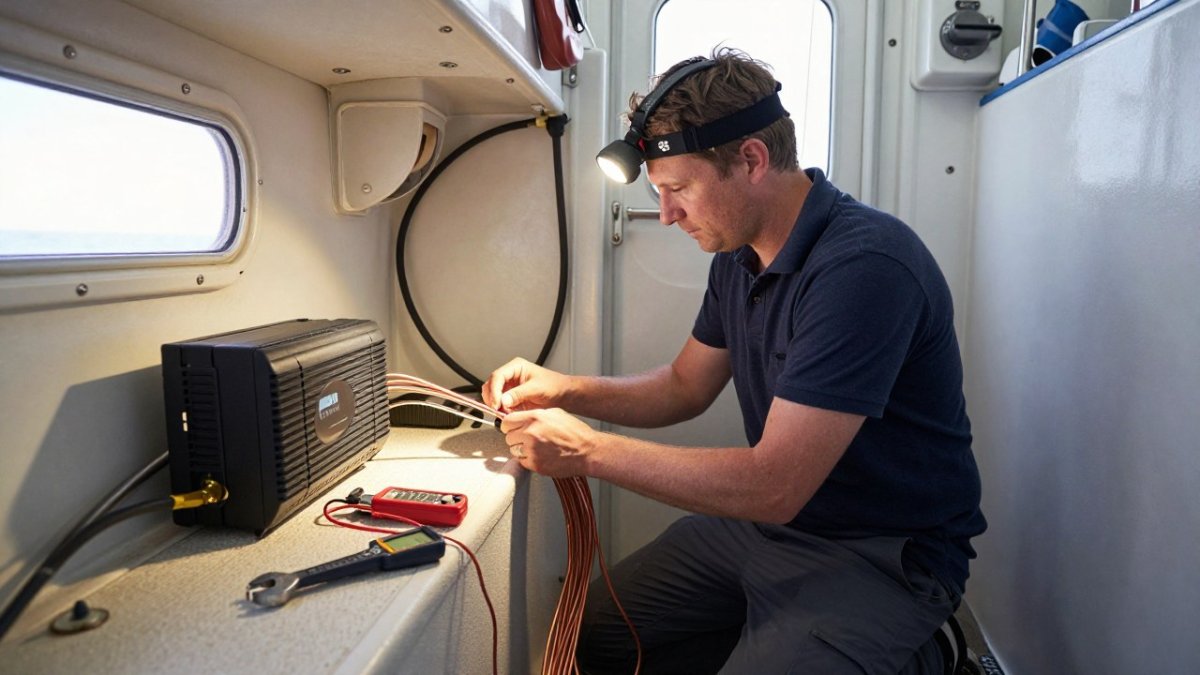
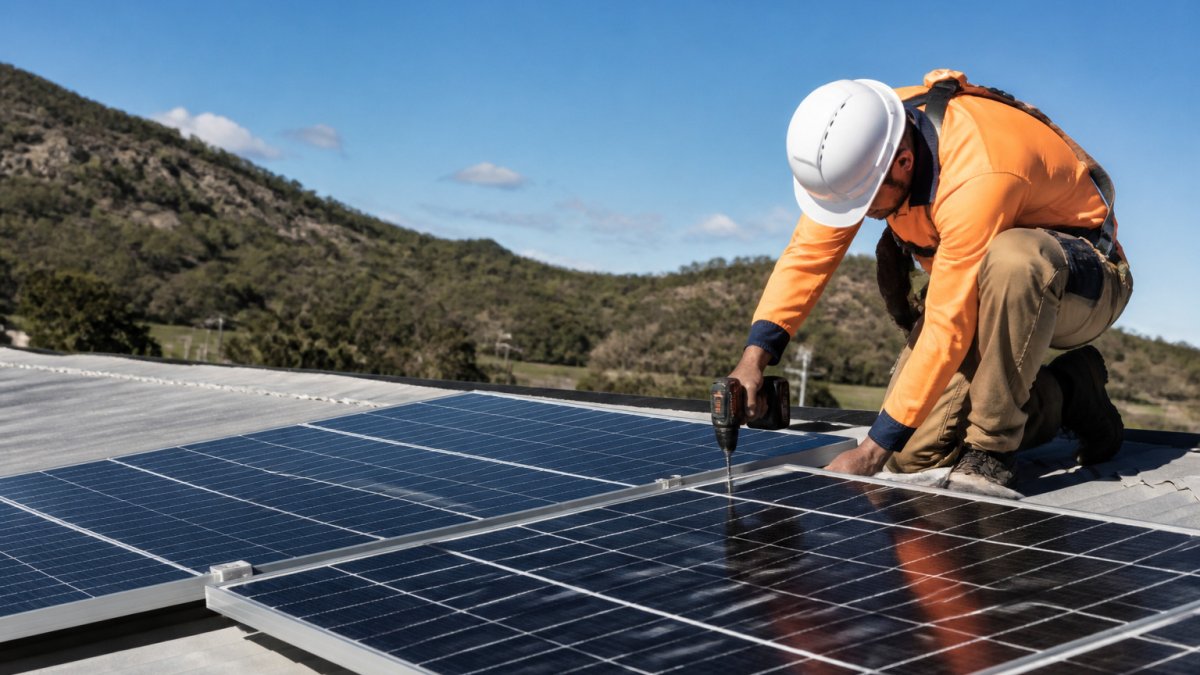
Roof-mounted systems stay in place and generate power whenever the sun hits them. Installation requires drilling into your roof, running wiring through the interior, and integrating with your electrical system; if your RV's wiring is sketchy, professional installation is non-negotiable. These systems suit RVers who stay put for weeks or drive through cloudy seasons where consistent output matters more than peak capacity.
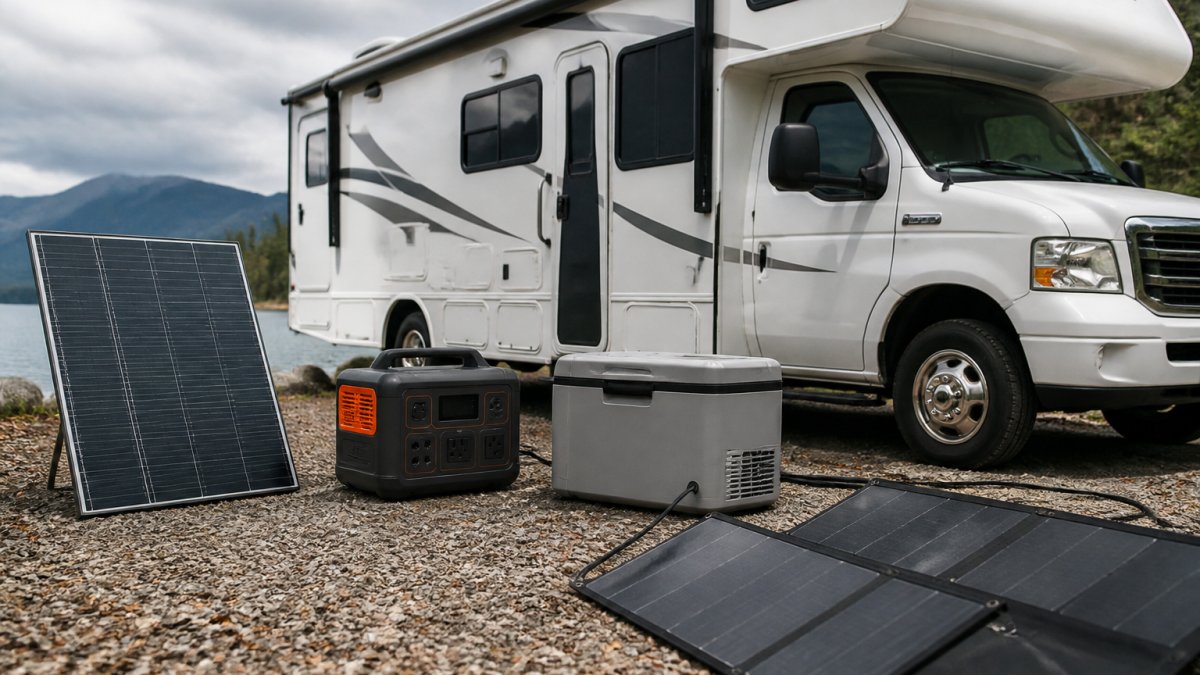
Portable panels give you control. You position them to track the sun, and on a clear morning a 200-watt portable panel can outproduce a roof-mounted 100-watt panel. They require no permanent installation, connecting via a weatherproof connector, but you must move them, store them while driving, and manage cables. For remote boondockers, that flexibility pays for itself.
Most experienced RV owners run both: a 200-watt roof-mounted system for baseline power and a 200-watt portable panel as a signature solar alternative RV setup for surge capacity and optimal positioning when stationary. This hybrid costs more upfront but delivers reliability neither system alone can match.
Top Signature Solar Alternatives for RV Use
Rich Solar MEGA 50 and NOVA MAX 3K
Rich Solar builds systems specifically for mobile applications. The MEGA 50 is a 50-watt, 12-volt panel that adds to existing roof-mounted capacity or works standalone for smaller RVs. The NOVA MAX 3K is a 3,000-watt hybrid inverter on a 24-volt system, a step up if you run multiple AC loads simultaneously.
The MEGA 50 suits RVers adding supplemental capacity without a full roof installation: at 50 watts it's not a primary source, but it's lightweight and portable.

Rich Solar products integrate well with compatible charge controllers and lithium batteries. Before buying, check whether your RV runs 12-volt or 24-volt: mixing voltages requires a DC-to-DC converter, adding cost and complexity. Building from scratch, 24-volt makes sense; upgrading an existing 12-volt RV, the MEGA 50 fits without rewiring.
Renogy 200W Portable Solar Panel
Renogy dominates the portable solar market for good reason. Its 200-watt portable panel generates roughly what a small roof-mounted system produces, but you control the angle and position throughout the day.
Renogy's panels fold for storage and use standardized MC4 connectors, so you can pair them with charge controllers and batteries from other manufacturers rather than being locked into Renogy's ecosystem.
The tradeoff is weight and setup time. A 200-watt Renogy panel isn't heavy, but deploying it every morning and packing it every evening becomes tedious for frequent movers, while for boondockers parked a week at a time it's routine.
Rich Solar ALPHA 4 LITE LiFePO4 Battery
This is where system compatibility becomes critical. The Rich Solar ALPHA 4 LITE is a 24-volt, 100-Ah LiFePO4 battery, solid capacity for a mid-sized RV system. LiFePO4 handles deep discharge without degrading, essential for off-grid living: lead-acid batteries die prematurely below 50% discharge, while lithium tolerates regular 80% discharge.
The 100-Ah capacity provides roughly 2.4 kilowatt-hours of usable energy at 24 volts, about 24 hours of moderate use for a refrigerator, laptop, and LED lighting before a full recharge.
The critical detail: this battery demands a compatible charge controller. A standard PWM controller can't safely charge lithium; you need an MPPT controller with lithium-specific programming, or you'll damage both. Many RV owners buy a lithium battery without understanding this, then blame the battery when it fails.
Victron Energy RV Solar System Setup
Victron Energy manufactures the charge controllers and monitoring systems professional RV installers specify. We're an authorized Victron Energy dealer, and we've built systems for hundreds of RV owners who needed compatibility certainty and reachable technical support.
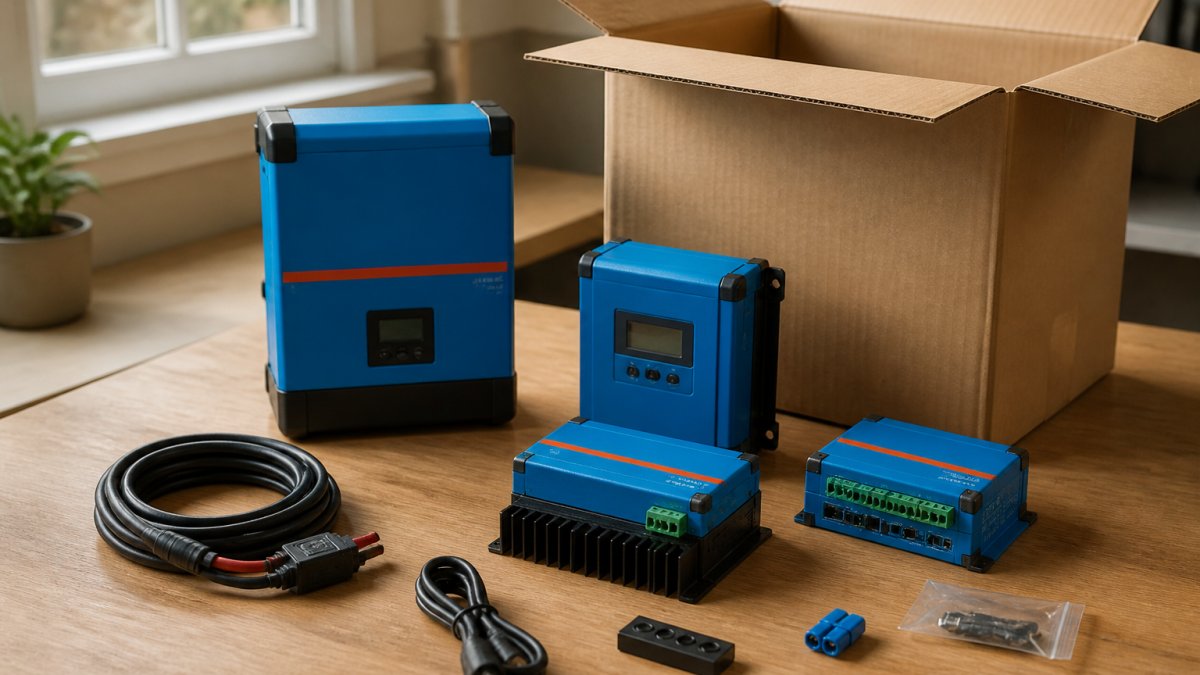
A typical Victron-based system combines a Victron MPPT charge controller (handling lead-acid and lithium safely), a Victron inverter (converting battery power to AC), and a Victron battery monitor (showing exactly what your system is doing in real time).
The return is reliability and support: when something goes wrong, and in RV life it always does, you call one vendor who understands how all the pieces interact. We provide technical support via phone, text, email, and in-person, and we don't disappear when your system is in the field.
Victron systems work with any quality solar panel and any LiFePO4 battery, so you're not locked into one brand ecosystem. You can add a Renogy portable panel to a system we designed, or upgrade your battery later without replacing the charge controller, flexibility worth the upfront cost if you plan to expand.
RV Solar System Sizing for Your Energy Needs
System sizing is where most RV owners make expensive mistakes, buying based on what sounds impressive rather than what they actually need.
Start by calculating daily energy consumption. A typical RV refrigerator draws about 30 amps at 12 volts continuously, roughly 360 watt-hours per day; LED lighting and a laptop charger add 50-100 watt-hours each; a small microwave run for 5 minutes adds 500 watt-hours.
Once you know your daily consumption, size your battery for 2-3 days without solar input, or 6-15 kilowatt-hours. A single 100-Ah lithium battery at 24 volts provides 2.4 kilowatt-hours, so most RV owners need two or three wired in parallel.
Size your solar panels to recharge that battery in 4-6 hours of useful sunlight.
Size your inverter for peak simultaneous load, not total load. If you'll never run your microwave and refrigerator compressor together, 2,000 watts suffices; if you will, you need 3,000 watts or more.
This calculation prevents the common mistake of oversizing everything, which adds weight, cost, and complexity, or undersizing and discovering your system can't handle your actual needs.
Battery Monitoring and System Optimization
A battery monitor isn't a luxury. It's the difference between knowing your system is working and guessing.
A quality battery monitor shows real-time voltage, current draw, and state of charge, plus trends. If your battery charges slower than it should, the monitor reveals it before you're stranded; if a load draws unexpected current, the monitor identifies it.
Victron battery monitors integrate with Victron charge controllers and inverters, communicating automatically. Via the Victron app you can view your battery state from anywhere: how much solar you're generating, how much you're consuming, and how long your battery will last at current draw rates.
This data transforms RV power management. Instead of rationing out of fear, you make informed decisions: you know you can run your AC for 2 hours before the battery hits 50%, and that your panels will recharge it fully by 2 PM on a clear day. You operate with confidence rather than anxiety.
Installed System vs. Portable Power Station
This decision splits RV owners into two camps, depending on travel style.
Installed systems are permanent: you integrate panels, batteries, charge controllers, and inverters into your RV's electrical system. This requires initial investment and possibly professional installation if your wiring is questionable.
Installed systems make sense if you'll keep your RV for years and boondock regularly.
Portable power stations are self-contained units you charge from solar or shore power, then use to power devices via built-in outlets.
Portable power stations make sense if you travel frequently, use your RV seasonally, or want to test off-grid living before investing in a full system.
The hybrid approach, a modest installed system plus a portable power station, gives baseline power plus surge capacity. This is what experienced RV owners actually run.
| Approach | Initial Cost | Flexibility | Best For |
|---|---|---|---|
| Installed system | $3,000-$8,000+ | Low, tied to RV | Long-term boondocking |
| Portable power station | $2,000-$5,000 | High, take anywhere | Seasonal use, testing |
| Hybrid (both) | $5,000-$12,000+ | High, backup + baseline | Serious full-time travel |
RV solar power isn't about the most expensive system or the biggest brand name. It's about matching your system to your travel pattern, energy needs, and technical comfort level.
At Victron Guy, we help RV owners build systems that work reliably in the field. We stock Victron charge controllers, inverters, and battery monitors that integrate seamlessly with any quality solar panel and lithium battery.
Frequently Asked Questions
What is the best alternative to Signature Solar for an RV?
The best Signature Solar alternative depends on your power needs and installation preference. Rich Solar offers 50-watt to 3,000-watt options for both portable and permanent RV setups, while Renogy provides portable 200-watt panels for flexible placement. Victron Energy components integrate well with existing RV electrical systems and offer superior monitoring. Compare your daily watt-hour consumption, available roof space, and budget to choose the right fit for off-grid travel.
Can I use Victron components in an RV solar system?
Yes. Victron Energy products are designed specifically for mobile and off-grid applications, including RVs and camper vans. Victron charge controllers, inverters, and battery monitors work across 12-volt, 24-volt, and 48-volt systems. Victron Guy, an authorized Victron dealer, provides free technical support via phone, text, email, or in-person to ensure your Victron components integrate correctly with your existing RV electrical setup and charge controller configuration.
What size battery do I need for an RV solar system?
Size your RV battery by calculating daily energy consumption in watt-hours, then multiply by 2 to 3 for depth-of-discharge headroom. A refrigerator drawing 50 amps for 12 hours uses 600 watt-hours daily; add AC loads, heating, and electronics for total demand. The Rich Solar ALPHA 4 LITE (100-Ah LiFePO4) provides 2,400 watt-hours at 24 volts. Use an RV battery monitor to track real-world consumption and adjust capacity accordingly for extended off-grid travel.
Will a 200W solar panel run a 12V fridge in an RV?
A 200-watt panel can supplement a 12-volt fridge on sunny days but rarely covers the full load year-round. A typical RV refrigerator draws 4 to 8 amps continuously, consuming 50 to 100 watt-hours per hour. The Renogy 200W portable panel generates roughly 150 to 200 watt-hours on a clear day, enough for partial charging but insufficient for continuous operation plus other appliances. Combine multiple panels or use a hybrid inverter with grid or generator backup for reliable cooling.
Should I choose a portable solar panel or a roof-mounted system for my RV?
Roof-mounted systems offer permanent coverage and cleaner aesthetics but require professional installation and roof modifications. Portable panels like the Renogy 200W allow flexible positioning to track the sun, reducing shade and boosting output, but require manual setup and storage space. Roof systems suit full-time RVers with stable power needs; portable panels work better for seasonal travelers or those with variable energy demands. Many RV owners combine both for maximum flexibility and supplemental power.